WHERE STRATEGY MEETS TECHNICAL EXECUTION.
PROJECTS
Builds · 2026
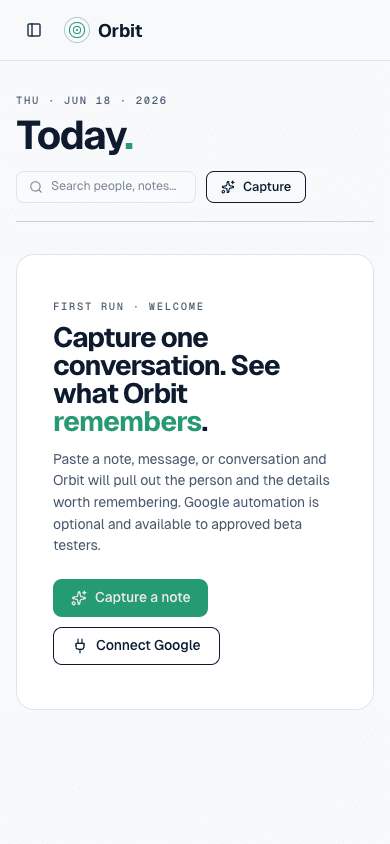
Orbit
Orbit started because I kept meeting people and then completely losing track of them — the conversation, the follow-up, the thing they mentioned that actually mattered. I'm building it with agentic coding tools: a multi-tenant relationship-intelligence app with an Express API, a React/Vite web app, and a native SwiftUI iPhone app, and I own the product requirements, UX/UI, and most of the build. The hard part wasn't the tech, it was deciding what Orbit should never do. It's assistive, not autonomous — it helps you remember and prepare, but it never reaches out to anyone on your behalf. I ran a 42-response networking-habits survey and a round of customer interviews to pressure-test that boundary and make sure the concept actually held up, not just sounded good. What I learned: the feeling you're going for matters as much as the feature list. I wanted something closer to a beautifully-made journal of the people in your life than a database of contacts — and that distinction changed almost every design decision after I made it.
Case Competition · 2026
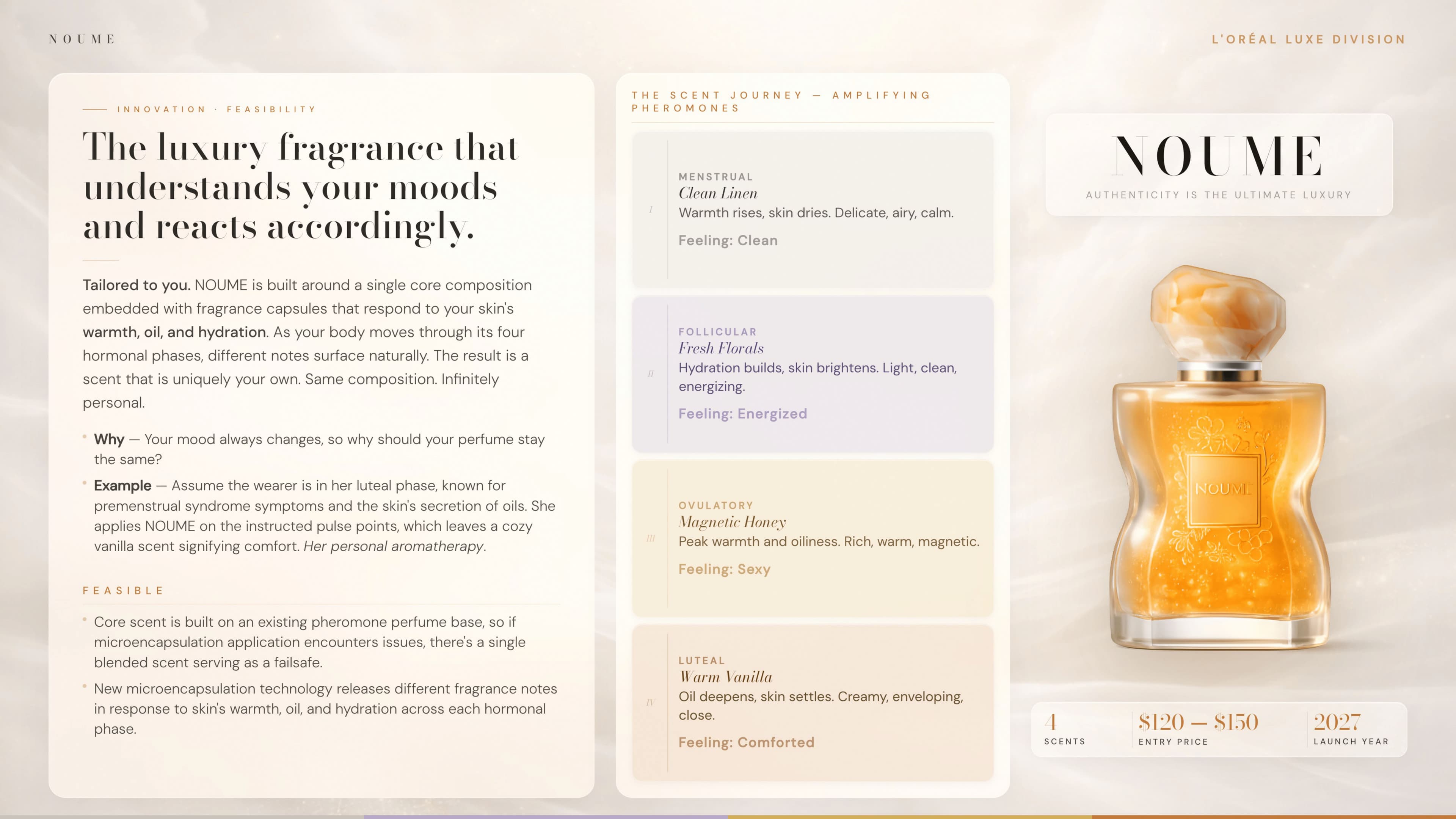
NOUME
Currently competing in L'Oreal Brandstorm 2026, the theme being "Craft the Future of Luxury Fragrance". NOUME is a luxury fragrance concept for L'Oreal Luxe that uses microencapsulation technology to respond to individual skin chemistry. It releases different scents as the user's body changes throughout the month, accentuating them rather than subduing. The idea is that a luxury fragrance shouldn't mask who you are, it should react to you.
Case Competition · 2025
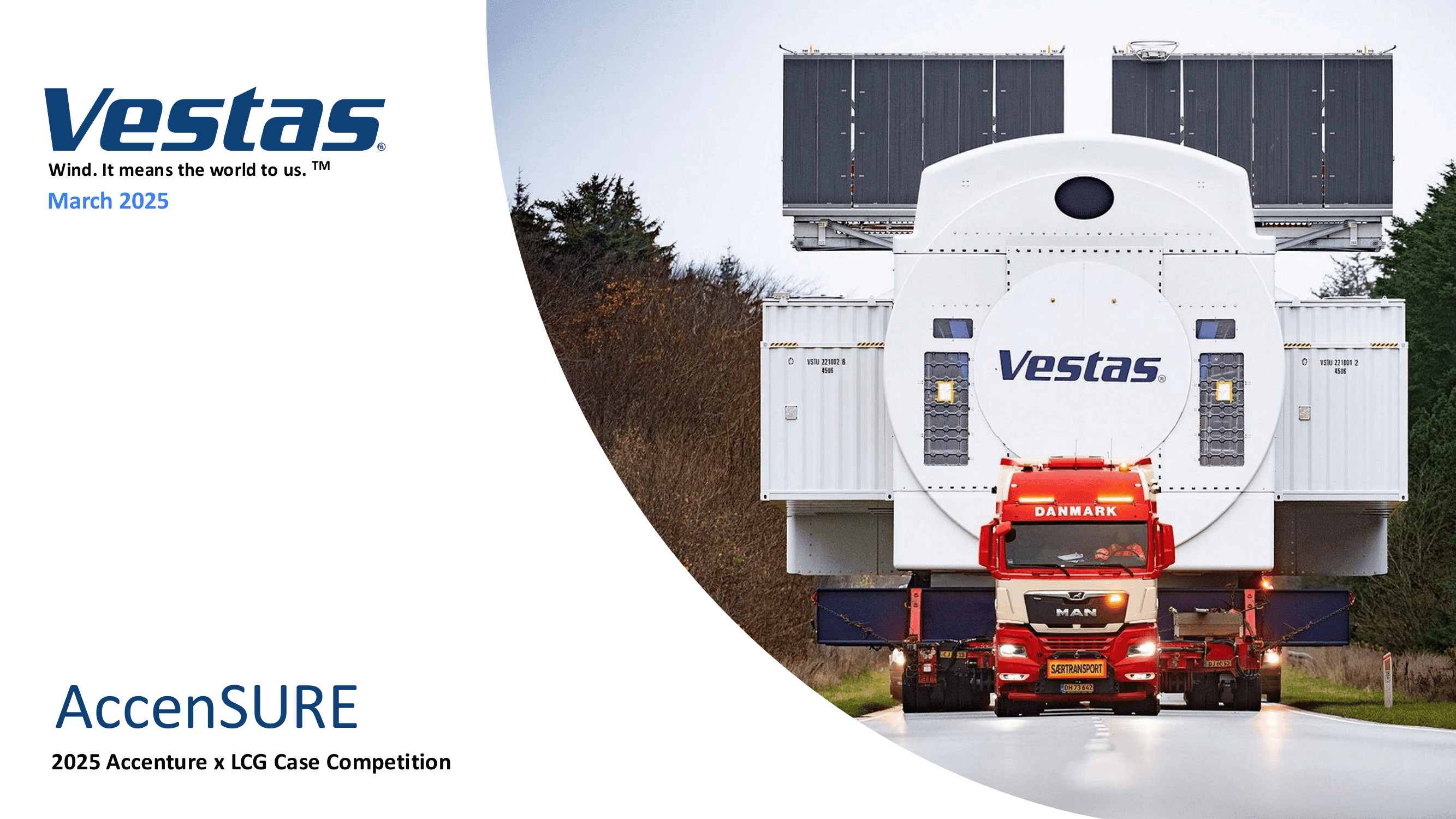
Accenture Case
Spring 2025, my team AccenSURE competed in the Accenture x LCG Case Competition featuring the Vestas case from the Copenhagen Business School Case Competition Invitational 2023. The prompt: how should Vestas, the world's largest wind turbine manufacturer, enter the Power-to-X (green hydrogen) market? We recommended Vestas focus on development, design, and service within the PtX value chain, starting through project consortiums and eventually expanding into full value chain ownership. I worked on the initial strategy and research, designed the deck, and built the financial models. We sized the green hydrogen market at ~€28B by 2030 and built a 10-year forecast projecting Vestas could hit 8.6% EBIT margins, up from 4.8%, on PtX revenue through a low-CapEx, service-heavy approach.
Builds · 2026
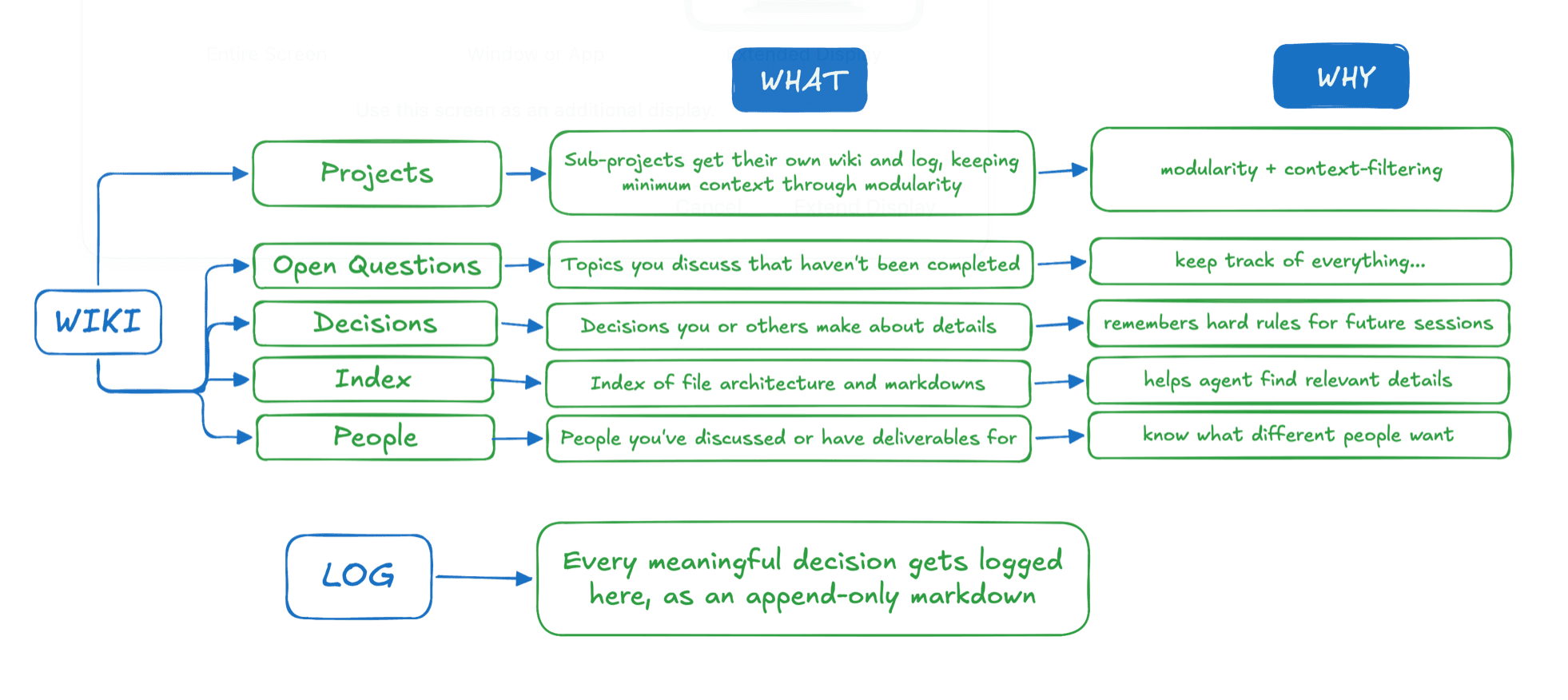
Project Memory Toolkit
AI agents kept forgetting everything between sessions — I'd re-explain the same decisions and context over and over, whether I was tailoring a resume or building a prototype. Inspired by Andrej Karpathy's approach to organizing research, I built a markdown-based memory system: a simple file tree any agent can read and update, instead of a tool like Obsidian that only a human opens. The hard part was making it genuinely agent-agnostic and durable — rules the agent follows for what to record and where, so decisions and open questions survive a context reset instead of getting rediscovered every session. What I learned: the system only works if updating it is cheaper than re-explaining yourself. I now run this memory kit across every project I'm building, including this website.
Builds · 2026
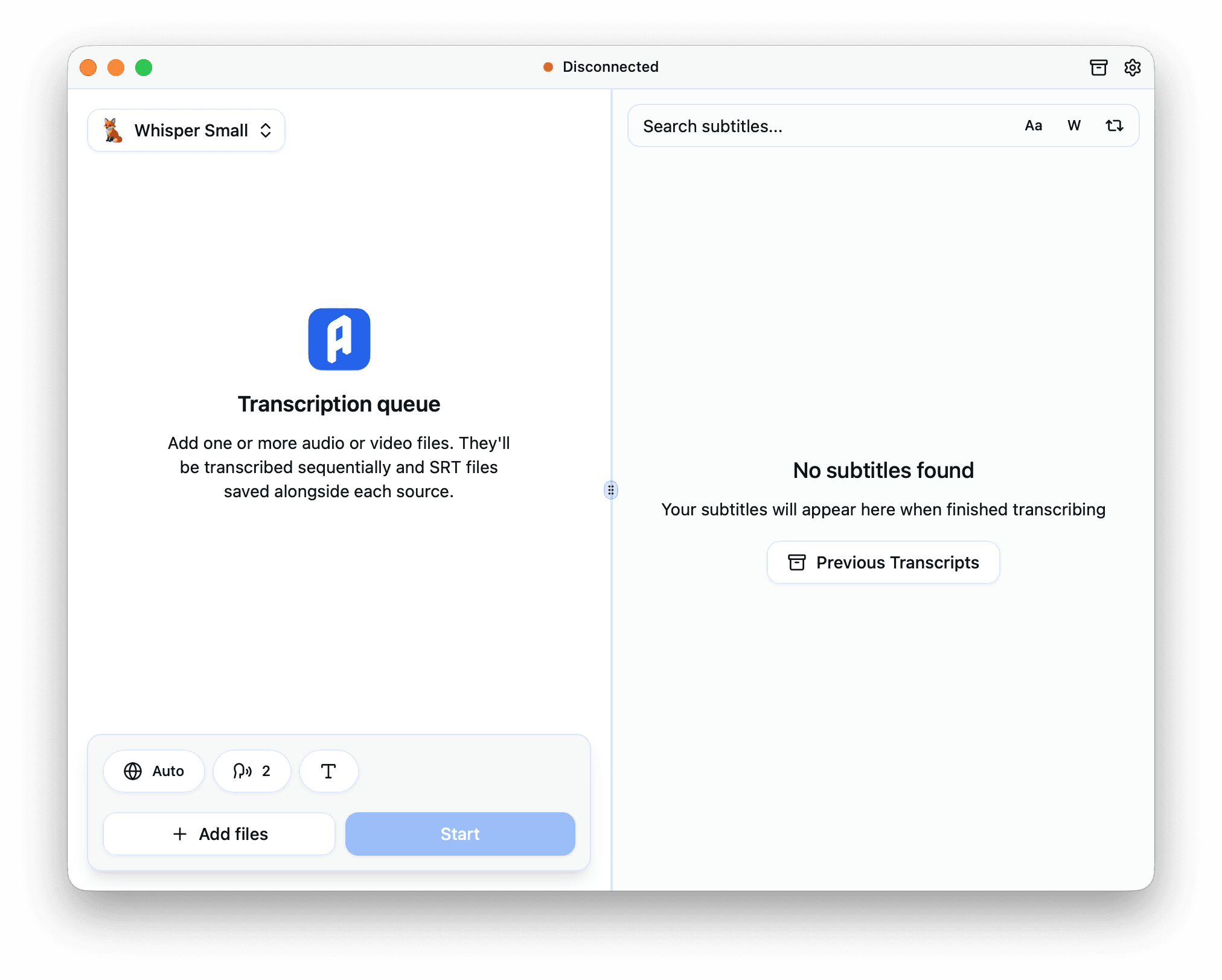
AutoSubs
AutoSubs exists because I was tired of paying per-minute for subtitle tools that also botched speaker labels. It's a cross-platform desktop app — Tauri and Rust on the backend, React up front — that runs AI transcription (Whisper, Parakeet, Moonshine) and speaker diarization entirely on your machine, plus translation and a DaVinci Resolve plugin so subtitles drop straight into your edit. The hard part was the diarization pipeline: getting speaker identification accurate enough to trust, and fast enough to make local processing worth it, across three transcription engines with different trade-offs. What I learned: shipping something that runs fully offline changes the bar for 'good enough' — there's no cloud fallback to paper over a bad model choice, so the engine-selection logic had to actually be right.
Builds · 2026
Internship Engine
Applying to internships meant rewriting the same resume and cover letter dozens of times, and losing track of what I'd said to which recruiter. So I built a system on top of the memory toolkit above: a resume-tailoring pipeline that classifies each job description and pulls from an approved story bank, a cover-letter generator that matches my actual voice, a contact CRM, and an application tracker. The hard part was resisting the urge to just describe every experience to the agent every time. I had to build an actual source-of-truth resume and a story bank organized by role lane, so tailoring pulls from verified facts instead of regenerating my own history each run. What I learned: the system is only as good as the discipline behind it — a lot of this project was less 'build a cool tool' and more 'write down the rules clearly enough that an agent can't drift.'
Builds · 2025
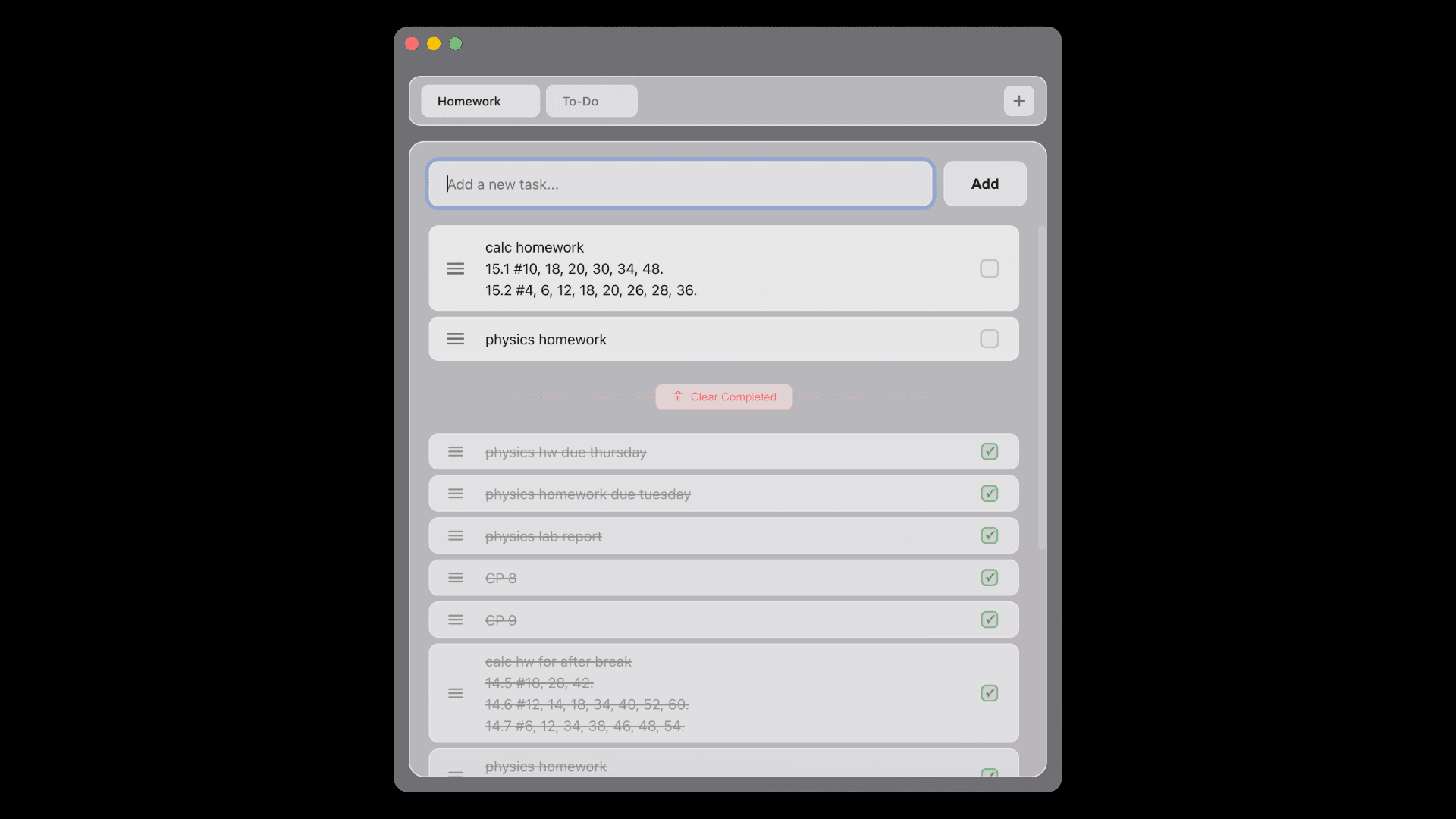
To-Do App
When I first downloaded Claude Code, my friend Adam recommended I start small. Build a To-Do app. I figured if I'm building one, might as well make it something I would use. I designed it to replicate Apple's new Liquid Glass style, and packed in every feature I could want. Took a lot of iterations and debugging, but I've been using it every day for the last two months.
Builds · 2026
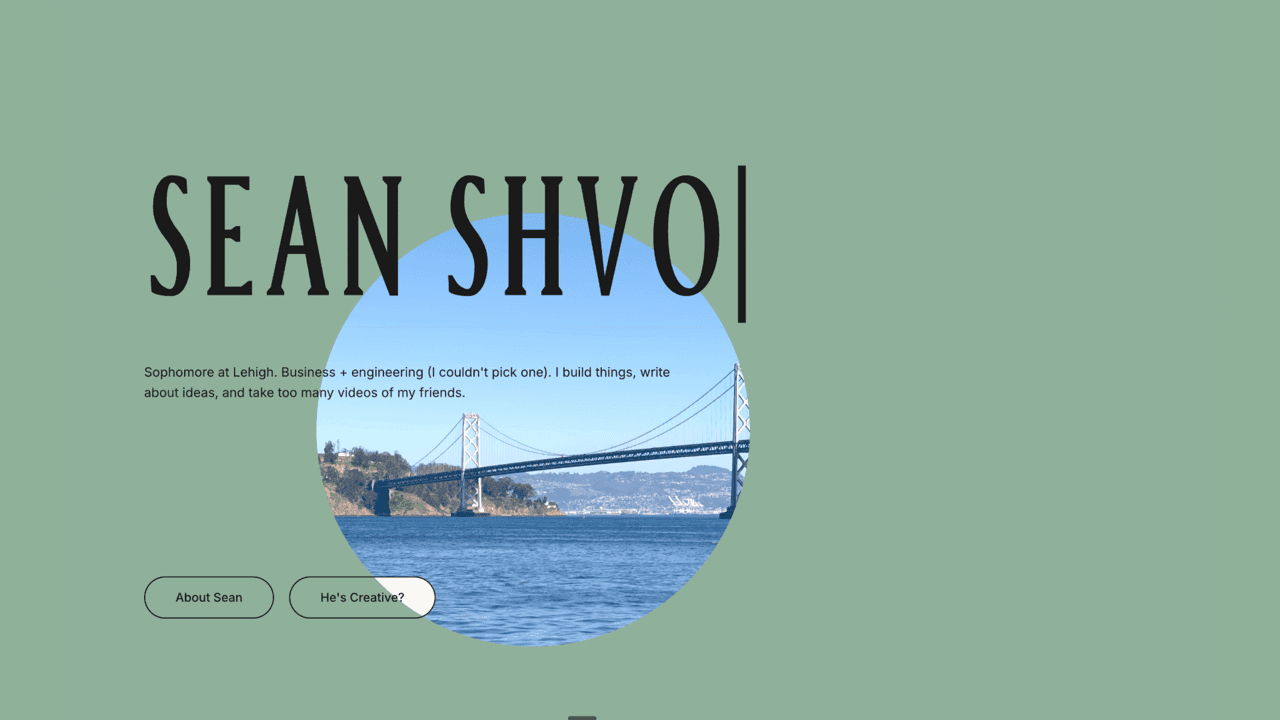
Website
The website you're on right now. I wanted somewhere to track what I work on and allow others to see the full picture. I built it using a workflow of Gemini Nano Banana, Pencil.dev, Claude Code, some heavy design inspiration, and my own expertise.
Initiatives · 2026
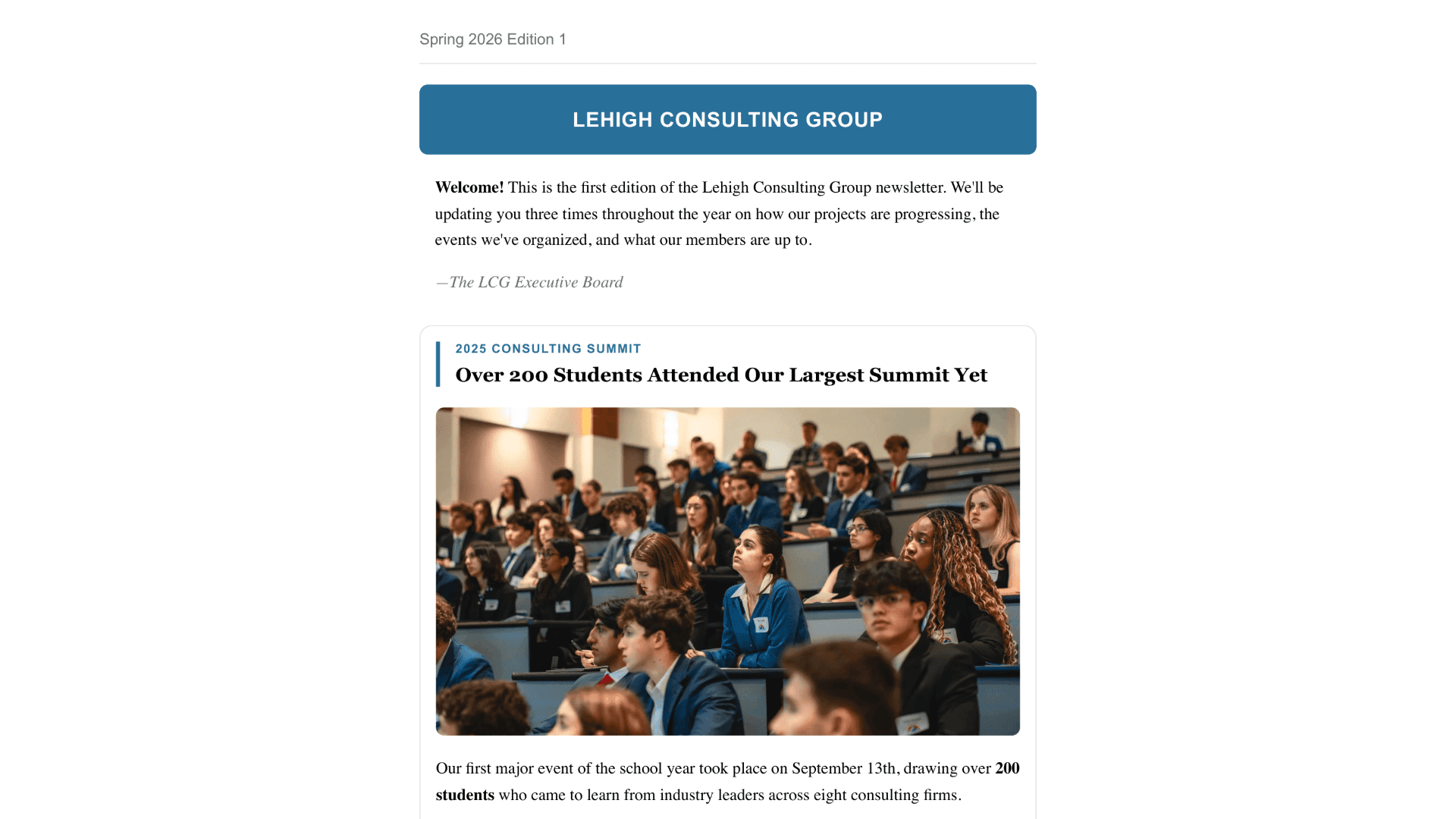
LCG Newsletter
Fall 2025, I noticed LCG's relationships with alumni and firm contacts were mostly limited to our annual Consulting Summit and recruiting events. I wanted to change that, so I pitched a newsletter. We wanted it to be interesting, something the people receiving it would want to read. Achieving this while maintaining the depth we wanted to include on the newsletter was a challenge. After many iterations in delivery formats, a friend mentioned we should aim for Morning Brew's design. I figured out how to replicate it without increasing LCG's costs, which involved designing it in HTML and pasting the code directly into Gmail's compose box via inspect element.